Here's screenshot of the radar from last Friday's Tornado Warning conditions.

This afternoon (Sunday) we had some freakish weather yet again.
[Got that dog walk in just in time, as the skies began to darken]
But hey, at least it cooled pleasantly for a moment from 92 down to 90... Woo-hoo! Ah, clouds! ... blissful relief from a week of sun-bludgeoning.
And then the cell erupted in a hubris of wind, rain, leaves, twigs, and whatever else was caught in the the vortices.
The sky out the back door to the northwest was specked with leaves and debris swirling in the microbursts from a T-Storm cell.
Huge trees (70 ft+ old growth) a-blowing sideways. Sheets of water cascading from the roof. (Uh oh, gutters must be clogged).
Flash flood conditions, the backyard is now a swimming pool.
RADAR THIS ORIFICE
I'm going to indulge in some pseudo science. And although I did geography, geology and geomorphology to A-Level, it was seriously interrupted by far too much guitar playing.
While I don't doubt radar imagery of orifices in the ozone layer that expose parts of the planet to greater degrees of undesirable effects (for humans and some animals), I'm still a little more disposed, for now, toward the stronger influence of macro weather cycles on this kind of weather, not to mention shifting continental plates.
Further on down this page, in an extract from the San Diego Natural History Museum, there's an interesting turn of phrase, it reads like this "As the Ozone Layer forms..." Who'd have think it — once upon a time we had no ozone layer at all. Whose fault was that?
TROPICAL NY & RED HERRING
It's easy to forget that once "this area" was a lot warmer and wetter.
Trouble is here wasn't always here and I'm not sure where "here" really was, back when here was somewhere else, if you get my continental drift ).
Anyway, it's interesting to note that New York has, in its past, owned its fair share of coral reefs. Right now I'm looking outside to see if any are forming in the street as a result of this passing mini typhoon-monsoon.
I'll admit, however, this is a bit of a red herring in global warning, since what was to become North America was closer to the equator, and what's more relevant is whatever was the prevailing climate on the land mass at the same latitude/longitude as present day New York. Not even, since geography, ecosystems, topology, and ocean currents would influence that climate in fundamental ways, anyway.
ANYWAY
"The abundance of fossilized corals in some regional rock formations confirms that most of Western New York was once covered by a warm, shallow sea." http://www.westernny.com/geology.html
"A coral bed in the Skaneateles Formation of central New York, here designated the Case Hill Coral Bed, attains a thickness of 1½ to 2 feet. Although it is apparently restricted to the Tully Valley region (Onondaga County), its exact areal extent is not known with certainty. The fauna of the Case Hill Coral Bed, a mixture of corals and other invertebrates, is especially significant in that it includes Hamilton favositids previously unknown below the Ludlowville Formation in New York. The range of Favosites argus is extended downward by at least 355 feet in the Tully Valley." c Journal of Paleontology. v 42, No. 1, 1968 by Thomas X. Grasso, Chevron Oil Co. New Orleans
Carboniferous Period (354-290 million years ago)
"Two major land masses form: Laurasia (North America, Greenland, Eurasia, and Scandinavia) to the north of the equator, and Gondwana (South America, Africa, peninsular India, Australia, and Antarctica) to the south. Collisions between Laurasia and Gondwana form major mountain ranges. Coal-forming sediments are laid down in vast swamps.
Global climatic changes occur, changing from warm and wet to cooler and drier. The result is a long interval of glaciation in the southern hemisphere."
© San Diego Natural History Museum
www.sdnhm.org
Devonian Period (417-354 million years ago)
"Europe and North America collide, forming the northern part of the ancestral Appalachian mountain range. Europe and North America straddle the equator. Africa and South America are positioned over the South Pole.
The climate is generally warm and moist. This period is dominated by various forms of fish—armored fish, lungfish, and sharks.
Ammonites evolve from nautiloids and become one of the dominant invertebrate forms.
As the ozone layer forms, the first air-breathing arthropods—spiders and mites—evolve on land. Amphibians evolve and venture onto land.
Plant life, including lowland forests of giant psilophyta plants, develop and spread over the planet."
NOT ALL MAN's DOING
As such, not convinced that the sole responsibility for global warming lies in the hands of man-made effectors such as increased CO2.
But the longer these anecdotal and empirical flip-flop weather events continue, the more they provide food for thought that man-made accelerants may be (or have been) exacerbating nature's own macro climate cycles, and/or other periodic climatological occurrences, such as a present El Nino.
EL NINO - NOAA
El Nino: Astromet 2010 Forecast & Teleconnections, **Updated 2010/2011 Climate Outlook
Well enough pseudo-science from me, time to make a pot of tea and see if the Yankee Game is back on.
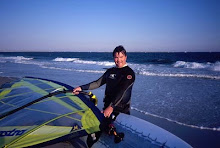
It's too hot for bike riding, and I'm totally spent from Saturday's surfing and Sunday's windsurfing efforts.
Stop Presses -- it's now 75F ... I'm going bike riding, before global warming resumes!




No comments:
Post a Comment